
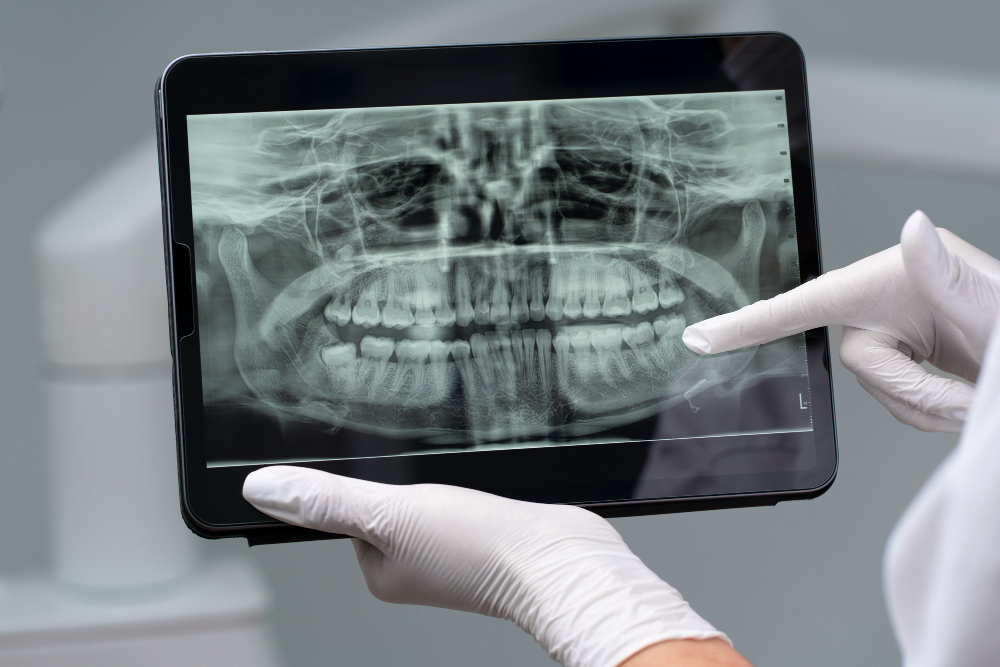
Digital X-Rays in Sugar Land, TX
Many dental problems — cavities between teeth, bone loss, infections brewing below the gumline, impacted teeth — are invisible to the naked eye. At Pearl Dental in Sugar Land, TX, we use digital X-ray technology to see what’s happening beneath the surface, giving Dr. Hussain the full picture needed to detect problems early and plan treatment accurately. Digital X-rays are faster, more comfortable, and emit significantly less radiation than traditional film X-rays. Call (281) 564-5654 to schedule your visit today.
What Are Digital X-Rays?
Digital X-rays use electronic sensors instead of traditional photographic film to capture images of your teeth, roots, jawbone, and surrounding structures. The sensor captures the image almost instantly and transmits it directly to a computer, where it can be viewed, enlarged, and adjusted for brightness and contrast — all within seconds. There is no waiting for film to develop and no need for chemical processing, making digital X-rays faster and more environmentally friendly than their traditional counterparts.
One of the most significant advantages of digital X-rays is the substantial reduction in radiation exposure. Digital sensors are far more sensitive than film, which means they require much less radiation to produce a high-quality image — typically up to 80–90% less than conventional X-rays. While traditional dental X-rays were already considered a very low-dose form of radiation, the reduction offered by digital technology gives patients even greater peace of mind, especially for those who require X-rays more frequently.
What Can Digital X-Rays Detect?
Digital X-rays allow Dr. Hussain to identify a wide range of conditions that cannot be seen during a visual exam. Cavities developing between teeth or beneath existing fillings and restorations are among the most common findings. Bone loss in the jaw — which can be an early indicator of gum disease or the result of missing teeth — is visible on X-rays long before it becomes severe. Infections at the root of a tooth, abscesses, and the extent of existing decay can all be assessed with precision.
X-rays are also essential for evaluating the position of developing teeth in children and teens, monitoring the progress of erupting wisdom teeth, planning for dental implant placement by assessing bone volume and density, and verifying the fit and integrity of existing restorations like crowns and bridges. When combined with a thorough clinical exam and our intraoral camera, digital X-rays give us the most complete diagnostic picture possible. Call (281) 564-5654 or request an appointment to experience the difference that advanced technology makes.
Frequently Asked Questions About Digital X-Rays
Are digital X-rays safe?
Yes. Digital X-rays emit up to 80–90% less radiation than traditional film X-rays, and dental X-rays were already considered a very low-dose form of radiation. At Pearl Dental, we also use protective lead aprons during X-rays as an additional safety measure. The diagnostic benefit of detecting problems early far outweighs the minimal radiation exposure.
How often do I need dental X-rays?
For most adults with good oral health, bitewing X-rays are recommended once a year and a full set of X-rays every three to five years. Patients with a history of cavities, gum disease, or other risk factors may need X-rays more frequently. Children may require X-rays more often to monitor developing teeth. Dr. Hussain determines X-ray frequency based on your individual health history.
Can I refuse dental X-rays?
Yes, patients can decline X-rays. However, doing so limits our ability to diagnose conditions that are not visible during a clinical examination. Many issues — such as cavities between teeth, early bone loss, or infections — simply cannot be detected without imaging. We always recommend X-rays according to your individual needs and encourage open conversation about any concerns you have.
Do dental X-rays hurt?
No. The X-ray process is completely painless. A small sensor is placed inside the mouth, which some patients find slightly uncomfortable — especially in certain areas — but the process itself takes only seconds per image. Our team works to make the experience as comfortable as possible for every patient, including those with a sensitive gag reflex.
Are digital X-rays safe during pregnancy?
Dental X-rays during pregnancy are generally considered safe when necessary, especially with the reduced radiation levels of digital technology and the use of a lead apron. However, routine X-rays are typically postponed until after delivery when possible. If you are pregnant or think you may be, always let our team know before your appointment so we can plan accordingly.
Can I see my X-rays during my appointment?
Absolutely. One of the great benefits of digital X-rays is that the images appear on a chairside monitor almost instantly, allowing Dr. Hussain to review them with you in real time. Being able to see exactly what we’re looking at helps patients better understand their oral health and any recommended treatments.
Why do I need X-rays if I haven’t had any dental problems?
Many dental problems — including cavities and early gum disease — develop silently without causing pain or visible changes until they are already well advanced. X-rays allow us to catch these problems at an early, more treatable stage, often preventing the need for more extensive and costly procedures down the road. Preventive monitoring is always the best approach to long-term oral health.