
Dental Bridges in Sugar Land, TX
A missing tooth does more than affect your smile — it can impact how you chew, how you speak, and the long-term health of the surrounding teeth and jawbone. At Pearl Dental in Sugar Land, TX, dental bridges offer a reliable, fixed solution for replacing one or more missing teeth without the need for surgery. If you’re ready to restore your smile and protect your oral health, call (281) 564-5654 to schedule a consultation with Dr. Hussain today.
What Is a Dental Bridge?
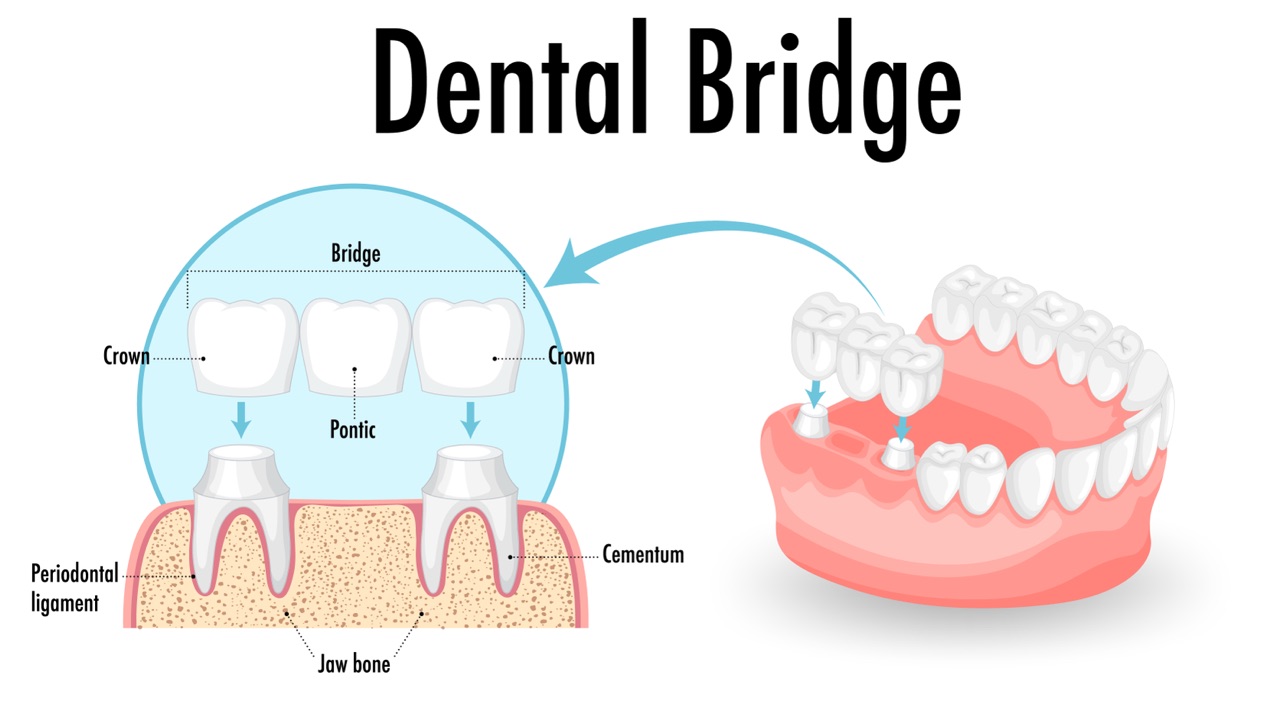
A dental bridge is a fixed restoration that literally “bridges” the gap left by a missing tooth or multiple adjacent missing teeth. It consists of one or more artificial teeth — called pontics — anchored in place by crowns on the natural teeth (or implants) on either side of the gap. These anchor teeth, called abutments, are prepared by removing a small amount of enamel so the crowns fit over them securely. The bridge is then cemented permanently in place, creating a restoration that functions and looks like natural teeth.
Traditional dental bridges are made from porcelain fused to metal or full porcelain, both of which can be color-matched to blend with your natural teeth. A porcelain bridge in the visible smile zone is virtually indistinguishable from natural teeth, while also being strong enough to handle the forces of normal chewing. Unlike partial dentures, a bridge is fixed — it does not come out and does not require adhesives or special cleaning routines beyond normal brushing and flossing.
Why Replace a Missing Tooth?
Many patients underestimate the consequences of leaving a gap where a tooth has been lost. When a tooth is missing, the surrounding teeth lose their support structure and begin to drift toward the open space — altering bite alignment, creating new areas prone to food trapping and decay, and potentially causing pain in the jaw joint. The jawbone beneath the missing tooth also begins to lose density over time without the stimulation a tooth root provides.
A dental bridge prevents this chain of events by filling the space immediately and restoring the forces that keep neighboring teeth in place. It also restores full chewing function on that side of the mouth — which reduces overcompensation on the opposite side that can lead to uneven wear. If multiple teeth are missing or the surrounding teeth are not strong enough to serve as abutments, we may discuss dental implants or partial dentures as alternatives. Call (281) 564-5654 or request an appointment to find the right solution for you.
Frequently Asked Questions About Dental Bridges
How long does a dental bridge last?
With proper care and good oral hygiene, a dental bridge typically lasts 10 to 15 years or more. Regular dental cleanings and exams are important for monitoring the health of the supporting teeth and the integrity of the bridge over time.
Does getting a dental bridge hurt?
The preparation of the abutment teeth is done under local anesthesia, so you won’t feel pain during the procedure. Some sensitivity in the prepared teeth for a few days afterward is normal. Once the permanent bridge is cemented, most patients find it comfortable and natural-feeling.
How is a dental bridge different from a dental implant?
A bridge is a fixed restoration supported by the teeth on either side of the gap. A dental implant is a titanium post surgically placed in the jawbone that functions as an artificial root and supports a single crown. Implants do not require alteration of adjacent teeth and preserve jawbone density better than bridges, but they involve surgery and a longer process. Dr. Hussain will help you decide which is most appropriate for your situation.
How do I clean under a dental bridge?
Because the pontic (artificial tooth) sits above the gumline, you’ll need to clean beneath it daily. Floss threaders, dental picks, or water flossers make it easy to remove food and plaque from under the bridge. Regular professional cleanings are also important to keep the gum tissue and supporting teeth healthy.
How many teeth can a bridge replace?
A traditional bridge can typically replace one to three consecutive missing teeth, provided there are healthy abutment teeth on each side to support the bridge. For larger spans or when multiple teeth are missing in different areas, other solutions such as implants or partial dentures may be more appropriate.
Will my bridge look natural?
Yes. Porcelain bridges are carefully matched to the shade of your surrounding natural teeth. When properly designed and fitted, a bridge is virtually indistinguishable from natural teeth in appearance and can significantly improve the overall aesthetics of your smile.
Does dental insurance cover bridges?
Many dental insurance plans cover a portion of the cost of dental bridges, typically classifying them as major restorative work. Coverage percentages and annual maximums vary by plan. Our team will verify your benefits and provide a cost estimate before treatment begins. Visit our financial information page for details on payment options.