
Dental Implants in Sugar Land, TX
Dental implants are the gold standard for replacing missing teeth — and for good reason. They are the only tooth replacement option that replicates both the root and the crown of a natural tooth, providing unmatched stability, function, and longevity. At Pearl Dental in Sugar Land, TX, Dr. Hussain provides dental implant consultations to help you determine whether implants are the right solution for your smile. Call (281) 564-5654 to get started on your path to a permanent, beautiful replacement tooth.
How Do Dental Implants Work?
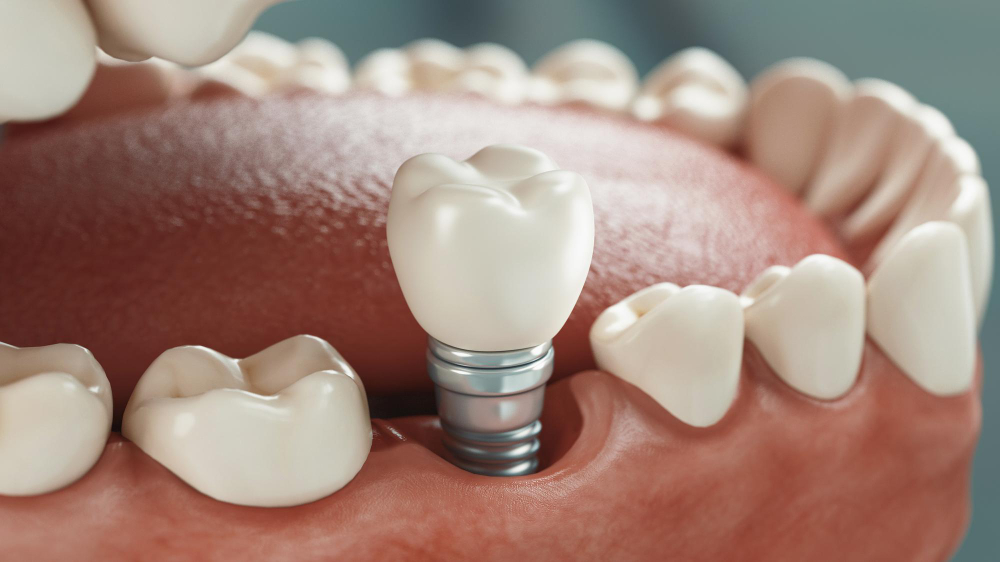
A dental implant is a small titanium post that is surgically placed into the jawbone to serve as an artificial tooth root. Titanium is biocompatible, meaning the jawbone naturally bonds with it through a process called osseointegration over the course of several months. Once the implant has fully integrated, it becomes a stable anchor for the final restoration — typically a custom crown that is matched to the color and shape of your surrounding teeth.
The implant process involves several stages. After the initial evaluation — which includes digital X-rays to assess bone volume and implant placement — the titanium post is placed in the jawbone. A healing period of three to six months follows while osseointegration occurs. Once the implant is stable, an abutment is attached to connect the implant to the final crown. The result is a restoration that looks, feels, and functions like a completely natural tooth.
Unlike dental bridges — which require the preparation of adjacent healthy teeth — implants stand completely on their own, preserving the surrounding natural teeth entirely. And unlike dentures, implants do not slip, require adhesive, or need to be removed. They are cared for just like natural teeth with brushing, flossing, and regular dental checkups.
Benefits of Dental Implants
The advantages of dental implants extend well beyond aesthetics. Because the titanium post functions like a tooth root, it stimulates the jawbone and prevents the bone resorption that naturally occurs after tooth loss. This preservation of bone structure helps maintain the natural contours of your face — preventing the sunken appearance that often develops over time with dentures or an untreated missing tooth.
Implants also restore full chewing function, allowing patients to eat a wide variety of foods without restriction. They are exceptionally durable — with proper care, implants can last a lifetime. For patients missing multiple teeth, implants can support implant-supported bridges or full-arch restorations like All-On-4. Call (281) 564-5654 or request an appointment to find out if dental implants are right for you.
Frequently Asked Questions About Dental Implants
Am I a candidate for dental implants?
Most healthy adults with one or more missing teeth are potential implant candidates. Adequate jawbone volume is needed to support the implant post. Patients who smoke, have uncontrolled diabetes, or are on certain medications may require additional evaluation. A thorough consultation with Dr. Hussain — including digital X-rays — will determine whether implants are right for you.
How long does the implant process take?
The full implant process typically takes three to nine months from placement to final restoration, with most of that time being the healing and osseointegration period. The surgical placement itself is a relatively brief procedure. The timeline varies depending on whether bone grafting is needed and how quickly your body heals.
Does getting a dental implant hurt?
Implant placement is performed under local anesthesia, so you should feel no pain during the procedure — only pressure. Post-surgical soreness and swelling for a few days afterward is normal and manageable with medication. Most patients are surprised by how comfortable the recovery process is.
How long do dental implants last?
With proper care and good oral hygiene, dental implants can last a lifetime. The crown placed on top of the implant may eventually need to be replaced after 15 to 20 years, but the implant post itself is designed as a permanent solution. Regular dental visits allow us to monitor both the implant and the surrounding bone and gum tissue.
What is the difference between a dental implant and a bridge?
A bridge spans the gap using crowns on the adjacent natural teeth as anchors, requiring those teeth to be prepared and permanently altered. An implant stands independently, preserving the surrounding teeth completely. Implants also stimulate the jawbone to prevent bone loss — something bridges cannot do.
Can dental implants fail?
Implants have a very high success rate — typically above 95%. Failure can occur if the implant doesn’t integrate with the bone properly, if there is infection around the implant, or if the patient does not follow post-surgical care instructions. Smoking significantly increases the risk of failure. Following Dr. Hussain’s instructions carefully and maintaining excellent oral hygiene are the most important factors in long-term success.
Does insurance cover dental implants?
Many dental insurance plans do not cover implants or cover only a portion of the cost. However, the crown placed on top of the implant may be covered as a restorative procedure. Financing options are available to make implants more accessible. Visit our financial information page for details, and our team will review your specific coverage at your consultation.